Black Rainbow: A Versatile Duo Font for Modern Branding
There’s a moment in every design project where you open a blank brand board and feel the weight of possibility. That’s when I first tested Black Rainbow on a boutique identity project, and it immediately caught my eye. As someone who works with typography daily, I’m always looking for fonts that can balance personality and professionalism—something that feels fresh yet approachable. Black Rainbow delivers on both fronts, offering a unique combination of handwritten elegance and clean sans serif structure.
The Beauty of a Dual Typeface
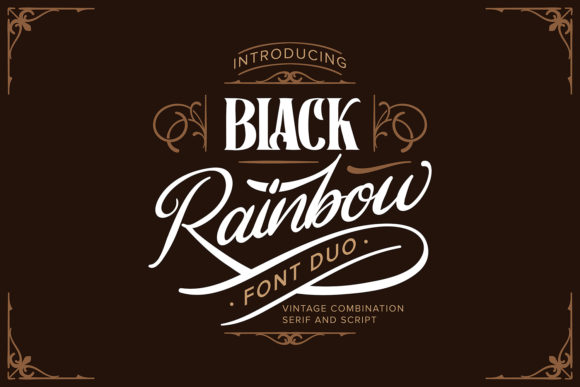
Black Rainbow is a duo font, meaning it features two distinct typefaces that work together seamlessly. The handwritten component brings warmth, character, and a touch of creativity, while the sans serif counterpart adds modernity, clarity, and structure. This duality makes it incredibly versatile for branding projects that require both emotional resonance and visual precision.
When I first used Black Rainbow on a logo concept for a local café, I was struck by how well the two styles complemented each other. The handwritten style worked beautifully for the café’s name, adding a personal and inviting feel, while the sans serif version provided a clean, professional look for supporting text like menu items or location details. It’s this thoughtful pairing that sets Black Rainbow apart from many other fonts in the Script Amp category.
Real-World Applications in Branding
Testing Black Rainbow across various design assets gave me a clearer sense of its strengths and limitations. For instance, I used it on a packaging mockup for a skincare product line, where the handwritten style added a handcrafted aesthetic to the product label, while the sans serif ensured the key information remained legible at small sizes.
On a website header, the sans serif version performed exceptionally well, maintaining readability even at smaller screen sizes. However, I noticed that the handwritten style became less legible when scaled down, which is something to consider for body text or long-form content. That said, for headlines, social media graphics, and short phrases, Black Rainbow shines.
One of my favorite uses was on an Instagram post for a handmade shop. The handwritten style stood out against a minimalist background, drawing attention to the shop’s name and tagline. It felt authentic and aligned perfectly with the brand’s ethos. On the flip side, I wouldn’t recommend using the handwritten style for a corporate logo or formal letterhead, as it might come off as too casual or playful.
Font Pairing and Design Flexibility
Black Rainbow’s dual nature makes it a great candidate for font pairing. When paired with a classic serif font like Georgia or a modern sans serif like Montserrat, it creates a balanced typographic hierarchy. I found that the contrast between the two styles in Black Rainbow made it stand out in a brand board, especially when used alongside more traditional fonts.
For web design, I used the sans serif version as the primary text and the handwritten style as an accent font for headings and call-to-action buttons. This approach helped maintain a cohesive look while adding visual interest. In editorial design, the same strategy worked well for magazine covers and blog headers, where the handwritten style could be used sparingly to highlight key elements without overwhelming the reader.
It’s also worth noting that Black Rainbow includes several alternates, ligatures, and swashes, which add depth and variety to your design work. These features are particularly useful for creating custom logos or brand assets that feel unique and tailored to your client’s needs.
Practical Considerations and Licensing
Before using any font in client work, it’s essential to review the licensing terms. Black Rainbow is a commercial font, so ensure that it’s appropriate for use in brand identity, packaging, websites, and print-on-demand products. Always check whether the font supports multilingual characters if your project involves non-English text.
Another consideration is file format. Black Rainbow is available in common formats like OTF and TTF, making it accessible for most design software. If you’re working on a digital product or template, make sure to include webfont options for broader compatibility.
Finally, don’t forget to test the font in different contexts. Use it on a business card, a social media layout, and a printed poster to see how it performs under various conditions. This hands-on testing will help you determine whether Black Rainbow is the right choice for your next project.